Quick Answer
In Connecticut, you cannot carry a loaded or readily accessible handgun in your vehicle unless you possess a valid Connecticut State Pistol Permit. If you have the permit, you may carry the loaded gun. However, if you leave the vehicle unattended for any amount of time, the handgun must be locked in the trunk, a locked glove box, or a locked safe.
The Statutory Trap for Unattended Vehicles
Even for legally permitted Connecticut residents, the state enforces incredibly strict rules regarding how firearms must be secured the moment you walk away from your car.
C.G.S. § 29-38
Weapons in Vehicles
It is a Class D felony to transport a handgun in a vehicle without a permit. If you don't have a permit, the firearm must be completely unloaded and secured in the trunk or a locked container out of reach of the driver/passengers.
C.G.S. § 29-38g
Unattended Storage Mandate
If you leave a handgun in an unattended vehicle, it must be secured in the trunk, a locked glove box, or a locked safe. If your vehicle is stolen or broken into and the gun was not locked in one of these three places, you will be arrested for a felony.
The SUV / Hatchback Felony Trap
While C.G.S. § 29-38g allows you to use your "trunk" as a legal safe, the statute explicitly defines what a trunk is not. "Trunk" does not include the rear of a pickup truck, hatchback, station-wagon, or sport utility vehicle (SUV). This means if you drive an SUV, throwing your gun in the back cargo area when you run into a store is a felony. You are legally mandated to have a locked safe or lock it in the glovebox.
Connecticut C.G.S. § 29-38g Compliance Safes
Because Connecticut law explicitly states that SUV cargo areas, hatchbacks, and truck beds do not count as "trunks" for safe storage, drivers of these vehicles must use a locked safe to avoid felony charges when leaving a vehicle unattended.
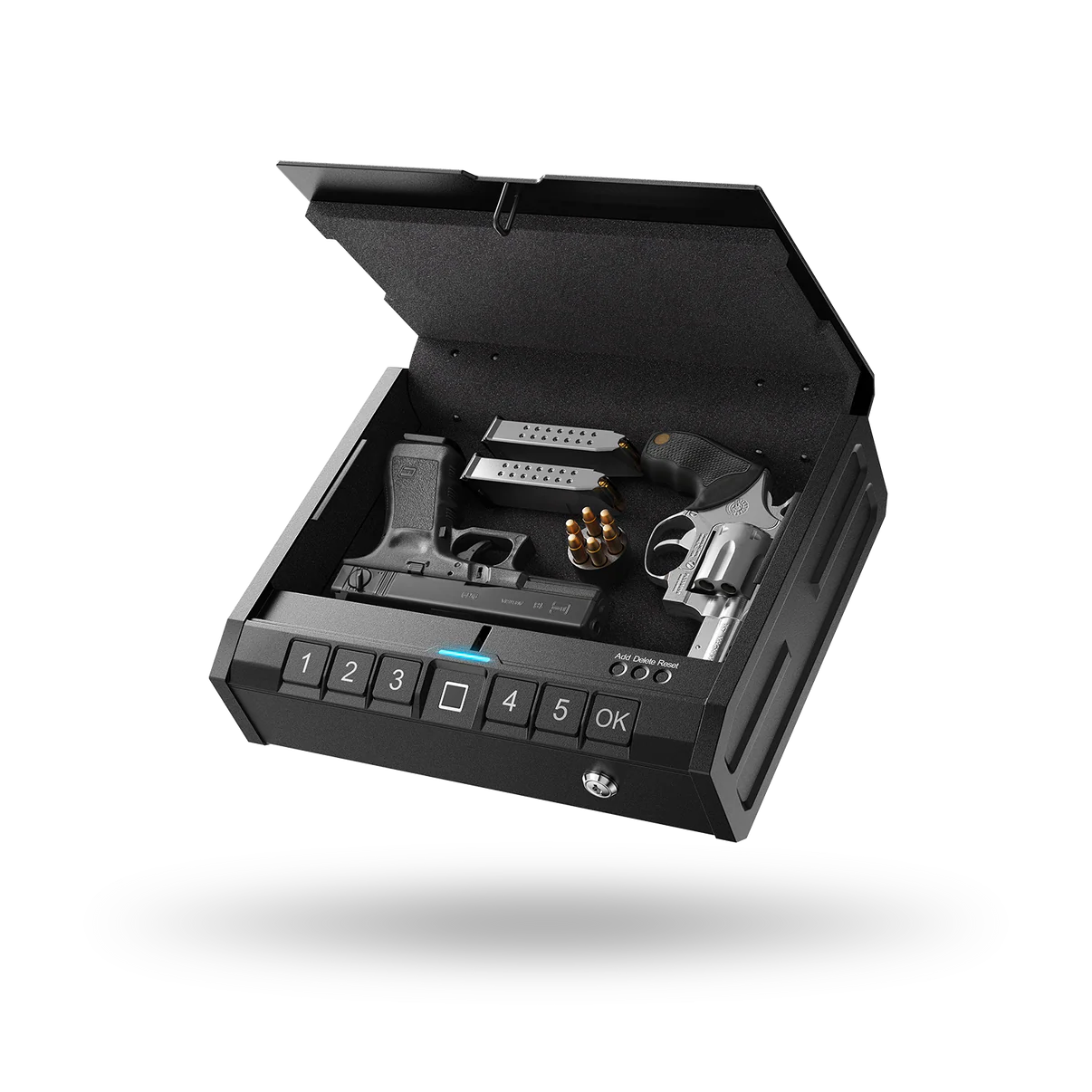
ONNAIS Alloy SE
A modern smart-safe with USB-C charging, 4-way access, and a heavy-duty steel cable to tether directly to your SUV seat frame.
ONNAIS Iron Pro
Solid steel construction and an anti-pry lid ensure your firearm easily meets Connecticut's strict "locked safe" definition.
ONNAIS Iron SE
Delivers premium biometric security, keypad backup, and a heavy-duty tethering cable at a highly accessible price point.
Duty to Inform Law Enforcement
Connecticut is a "No Duty to Inform" state by statute. You are not legally required to immediately notify an officer that you have a loaded firearm in the vehicle upon initial contact. However, if a police officer asks to see your permit, or explicitly asks if there are weapons in the vehicle, you must comply and present your Connecticut Pistol Permit.
Frequently Asked Questions
Can I drive through Connecticut to get to another state?
Yes, but only under the protection of the federal Firearms Owners' Protection Act (FOPA). The firearm must be unloaded and locked in the trunk (or a locked container other than the glovebox). Your journey must be continuous; stopping for anything other than a brief emergency or gas invalidates the federal protection and subjects you to Connecticut's felony transport laws.